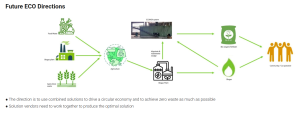
For centuries, returning organic waste to the soil has been the cornerstone of sustainable agriculture. However, as global populations rise and environmental regulations tighten, the “natural” speed of decomposition is no longer enough.
Enter Enzymatic Fermentation (typified by systems like ECONEX fermentation system)—a bio-tech breakthrough that is challenging Traditional Composting for the future of soil health. Here is a deep dive into how these two methods compare.
The Mechanism: Nature vs. Turbocharged Science
Traditional Composting relies on passive microbial action. Bacteria and fungi naturally present in the environment slowly break down organic matter. This process requires “turning” the pile to introduce oxygen and can take anywhere from 3 to 9 months.
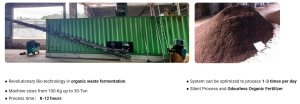
Enzymatic Fermentation uses a targeted bio-catalyst. Instead of waiting for microbes to multiply, a concentrated “cocktail” of enzymes is added to the waste. These enzymes act like chemical scissors, instantly snipping complex organic molecules (proteins, fats, and cellulose) into simpler nutrients. The Result: Completion in 8 to 12 hours.
The Battle of the Footprint: Land and Environment
| Feature | Traditional Composting | Enzymatic Fermentation (e.g., ECONEX) |
| Space Required | Large “windrows” or piles; requires significant acreage. | Compact, modular units; 75% less land required. |
| Odor Control | High; releases ammonia and methane (GHGs). | Zero odor; closed-system captures or prevents gas release. |
| Pest Attraction | Attracts flies, rodents, and birds. | Silent, sealed, and pest-free. |
| Leaching Risk | High; rainwater can wash nutrients into groundwater. | Zero; the process is contained and dry. |
Quality & Biosecurity: Variable vs. Sterile
One of the biggest risks in traditional composting, especially when using livestock manure or sludge, is the survival of pathogens like E. coli or salmonella.
Variable Heat: Traditional piles often have “cold spots” where pathogens survive. Weed seeds also frequently remain viable, leading to weed outbreaks when the compost is spread.
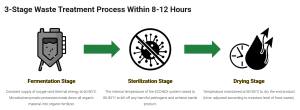
The 85°C Standard: Modern enzymatic systems use integrated thermal energy. By maintaining a constant 80–85°C, the system ensures total sterilization. Every batch is a consistent, fine-grain product free of pathogens and dormant seeds.
Economic Efficiency: Labor vs. Automation
While traditional composting has low equipment costs, its “hidden” costs are high:
Labor: Constantly turning piles and monitoring moisture levels.
Time Value: Capital is tied up in waste for months before it can be sold or used as fertilizer.
Consistency: Industrial farmers need guaranteed NPK (Nitrogen, Phosphorus, Potassium) levels, which are harder to standardize in open-air piles.
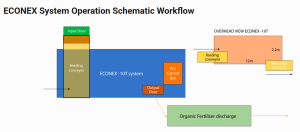
Enzymatic systems require an initial investment in hardware but offer on-demand production. A farm can process its morning waste and have market-ready fertilizer by the evening.
Conclusion: Which is the Winner?
Traditional Composting remains a valid choice for small-scale home gardening or low-intensity hobby farms where time and space are not constraints.
However, for industrial agriculture, food processing, and “Zero-Waste” cities, Enzymatic Fermentation is the clear winner. It transforms waste management from a slow, smelly burden into a high-speed, precision manufacturing process.