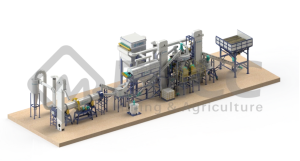
As global chemical and fertilizer compounding facilities face tightening energy regulations and rising fuel costs, dry compaction processing has become a focal point of modern factory floor optimization. At the center of this shift is the Double-Roller Extrusion Granulator.
By evaluating the core engineering advantages, operational trade-offs, and raw material compatibility of this technology, plant managers can accurately calculate its long-term return on investment (ROI).
Roller Press Granulator Pros and Cons
Pros: No Moisture Added- Elimination of Post-Drying Rotary OPEX
Heavy Hydraulic Nip – Destructive Interlocking (Crush Strength 30N-55N)
Cons: Mechanical Output – Angular Irregular Geometry (Requires Polishing)
Metallurgical Wear – High Friction Demands Premium Wear Alloys
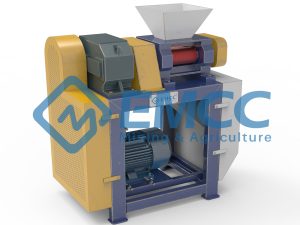
- Technical Advantages: Lowering OPEX and Boosting Density
The double-roller extrusion granulator delivers substantial operational benefits by moving away from traditional moisture-driven agglomeration layouts:
Zero Thermal Energy Expenditures: Because the system compresses dry raw powders under heavy mechanical force without adding water or chemical liquid binders, the process completely bypasses downstream rotary drum dryers and large cooling arrays. This structural omission slashes the plant’s thermal energy consumption for that specific processing loop, protecting operating margins from international fuel price shocks.
Exceptional Structural Particle Density: Operating under massive hydraulic linear pressure, the synchronized counter-rotating rollers force powdery crystal structures to plastically deform and fuse at the molecular level. This produces granules with a high average crush strength exceeding 30N–55N, making them highly resilient against crumbling during maritime transit or within pneumatic broadacre seeding drills.
Streamlined, High-Yield Logistics: The integrated crushing and multi-stage screening loops return all off-spec fines instantly to the primary feed hopper. This tight automated circle maintains a guaranteed low material recycle rate (even ≤5%), optimizing raw material utilization far beyond the volatile performance parameters of standard wet drum or pan granulation methods.
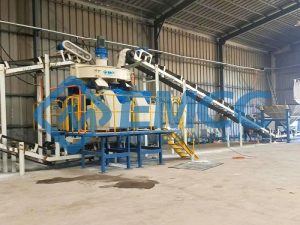
- Mechanical Drawbacks: Geometrical and Operational Trade-Offs
Despite its high efficiency, dry roller compaction introduces specific operational constraints that require careful plant planning:
Angular, Irregular Granule Shapes: The dual-shaft breaker system shears compressed material flakes into angular fragments rather than smooth spheres. If destined for premium bulk blended (BB) lines where perfect spherical uniformity is required to prevent nutrient segregation, operators must add a post-extrusion spheronization or polishing drum to round off the jagged edge vertices.
High Metallurgical Wear with Abrasive Feeds: Squeezing dry, crystalline minerals at intense pressure generates high friction along the roller surfaces. Even when utilizing rollers forged from premium, wear-resistant alloys, processing highly abrasive chemical feedstocks accelerates component wear, requiring planned maintenance schedules to prevent structural deformation of the roller indentations.
- Ideal Material Application
The double-roller setup delivers its highest economic returns when processing specific raw chemical matrices that reject liquid-driven agglomeration loops:
Material Compatibility
Compatible Feedstocks: Ammonium Chloride (NH4Cl), Potassium Chloride (KCl), Potassium Sulfate (K2SO4), Organo-Mineral Compounds, NPK, etc.
Reasons for Success: Zero natural plastic elasticity; naturally repel fluid binders but interlock reliably under high mechanical force
Specialty Sensitivity: Bypasses hot rotary dryers entirely, preserving the structural integrity of heat-sensitive chemical blends
By deploying this robust mechanical pathway, manufacturing facilities can seamlessly bypass the high capital outlays (CAPEX) and energy footprints of traditional wet processing setups—transforming difficult, non-cohesive mineral powders into a highly consistent, high-margin commercial asset.