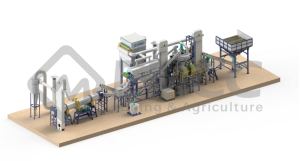
Global fertilizer manufacturers have broken through one of the crop nutrition industry’s most stubborn operational barriers: the severe difficulty of granulating non-cohesive, sandy raw materials. By deploying advanced double-roller dry extrusion granulation systems, processing facilities have successfully cleared the technical bottlenecks that historically crippled the continuous production of high-potassium, low-nitrogen compound fertilizers.
The Physics of the Sandy Material Challenge
Global commercial agriculture increasingly demands high-potassium (K), low-nitrogen (N) fertilizers for high-value cash crops. However, manufacturing these blends using traditional wet disc or rotary drum systems is an engineering nightmare. Primary potassium sources—like potassium chloride (KCl) and potassium sulfate (K₂SO₄)—possess virtually zero plastic elasticity or natural cohesion, causing them to repel water-based binders. This lack of binding prevents the required “snowball” layering effect, triggering massive material recycle loops (40%-70%), severe equipment wear, and brittle granules that easily crumble back into dust during transport.
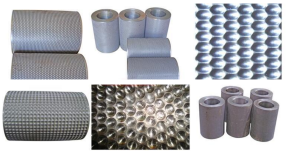
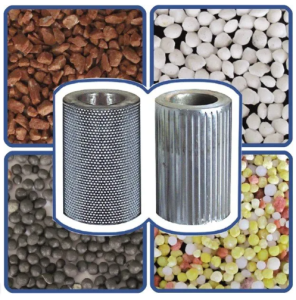
The Double-Roller Dry Extrusion Solution
The double-roller dry extrusion technology resolves this crystal binding failure via a zero-moisture, purely mechanical compaction framework. Instead of using moisture or liquid chemical binders to force particle adhesion, this system utilizes high-intensity, synchronized hydraulic forces to induce immediate molecular interlocking directly among the sandy
Double-Roller Dry Extrusion Mechanics:
Sandy Powder Mix (Zero Moisture Added) → Forced Twin-Screw Feed (De-aeration Compression) → High-Pressure Rollers (Molecular Interlocking) → High-Strength Flake → Integrated Crushing/Screening → Dense Granules
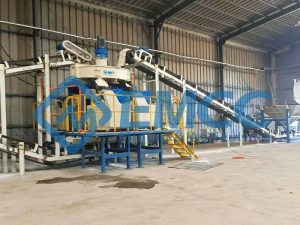
Traditional Wet Granulation VS. Dry Extrusion Method:
| OPERATIONAL PARAMETER | WET DRUM/PAN METHODS | DRY EXTRUSION TECH |
| Adaptability to Sandy Feedstocks | Poor (Severe Crumbling) | Excellent (High Hardness) |
| Liquid Binder / Moisture Demand | High (Requires 5-12% H2O) | Dry Run |
| Post-Granulation Drying Costs | High Thermal OPEX | Low Energy Cost Required |
| Realized Material Recycle Ratio | Extreme (40% to 70%+) | Minimal even ≤8% |
The resulting granules possess exceptional crush strength and uniform density. This structural hardiness ensures that the high-potassium, low-nitrogen pellets can easily withstand bulk maritime logistics, long-distance handling, and pneumatic broadacre seeding drills without fracturing. By unlocking this dry compression pathway, fertilizer facilities can now expand seamlessly into the lucrative premium plant nutrition market, transforming difficult sandy minerals into a highly consistent, high-margin commercial product.