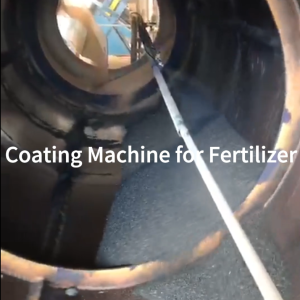
In the competitive landscape of modern agriculture, the quality of a fertilizer is no longer judged solely by its NPK ratio. Today, the “delivery vehicle”—the granule itself—is just as important. Fertilizer coating is the specialized process of applying a protective or functional layer to fertilizer granules. This small addition makes a world of difference in nutrient efficiency, storage stability, and environmental protection.

What is Fertilizer Coating?
Fertilizer coating is a post-granulation process where a drum or pan applies a thin, uniform layer of liquid or powder agents onto the surface of granules. This transforms standard fertilizer into Slow-Release (SRF) or Controlled-Release Fertilizer (CRF), or simply enhances its physical properties.
Why Use a Coating? Three Critical Roles
Controlled Nutrient Release
Standard fertilizers can dissolve too quickly in the soil, leading to “nutrient leaching” (where nitrogen washes away before the plant can use it). Coating acts as a physical barrier, regulating the release of nutrients to match the crop’s growth cycle. This can increase nitrogen use efficiency by up to 30-50%.
Anti-Caking & Moisture Resistance
Fertilizers like Urea and Ammonium Nitrate are “hygroscopic”—they love to absorb water from the air. Without coating, these granules would turn into a solid, unmanageable block in a warehouse. Coating prevents caking and keeps the product free-flowing, which is vital for mechanical seeding.
Micronutrient Enrichment
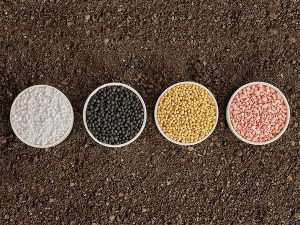
Coating allows producers to add a “value-layer.” By spraying micronutrients (such as Zinc, Boron, or Manganese) or beneficial microbes onto the surface of a base NPK granule, you ensure that every grain provides a complete nutritional package.
The Technology: Rotary Coating Systems
The most efficient industrial method is the Rotary Drum Coating Machine.
The Curtain Effect: As the drum rotates, the internal flight design lifts the granules and lets them fall in a continuous “curtain.”
Atomized Spraying: A high-pressure nozzle sprays a fine mist of oil or polymer binders onto the falling granules to ensure 100% coverage without clumping.
Powder Adhesion: If a powder coating is required (like talcum or kaolin), it is introduced after the liquid phase to create a smooth, dry finish.
Types of Coating Materials
Polymer/Resin: The most advanced. The thickness of the polymer skin determines exactly how many days the fertilizer will last (e.g., 90-day vs. 180-day release).
Sulfur Coating: Commonly used for Urea. It is cost-effective and adds secondary nutrients (Sulfur) to the soil.
Waxes and Oils: Used primarily for anti-caking and dust suppression in standard NPK compound fertilizers.
Key Success Factors in the Factory
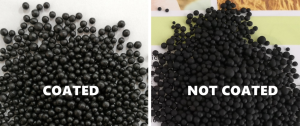
To achieve a “premium” coat, two factors are non-negotiable:
Granule Temperature: If the fertilizer is too hot when it enters the coater (usually it should be below 40°C), the coating oil may not set, leading to a sticky mess. This is why a Rotary Cooler is essential before the coating stage.
Granule Sphericity: The rounder the granule (achieved by high-quality Disc or Drum Granulators), the more uniform the coating will be.
Conclusion
Fertilizer coating technology is the bridge between traditional farming and high-tech, sustainable agriculture. It reduces the amount of fertilizer needed, lowers labor costs for farmers, and protects our groundwater from runoff.
At EMCC, we don’t just provide the coating machine; we design the entire thermal and chemical process to ensure your final product is market-ready and high-performing.