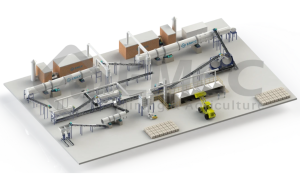
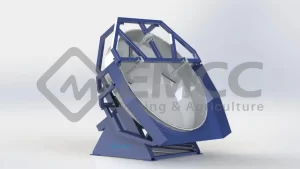
In fertilizer processing, chemical manufacturing, and metallurgy, the disc pelletizer (pan granulator) is a classic choice for turning fine powders into uniform spherical pellets via wet agglomeration.
Below is a concise evaluation of its core advantages, drawbacks, and trade-offs to help you decide if it fits your production line.
Key Advantages (Pros)
High Granulation Yield (88%–93%+): Excellent on-size yield means minimal off-spec material, keeping the recycle ratio low.
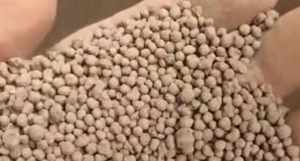
Superior Pellet Aesthetics: Produces smooth, highly spherical pellets that reduce dust and command higher market value.
Low Initial Investment (CAPEX): Simple mechanical structure makes it significantly cheaper upfront than rotary drum granulation systems.
Low Mechanical Power Demand: Uses rolling friction and capillary force rather than heavy hydraulic compression, keeping electricity draw low.
Key Disadvantages (Cons)
High Thermal Drying Costs (OPEX): Requires adding 12%–25% moisture to form pellets, making downstream rotary drying the largest operating expense.
Requires Fine Feedstock: Ineffective on coarse material—raw feed powder better be finer than 80 mesh.
Dust & Enclosure Needs: Open-pan design gives great operational visibility but requires dust collection hoods for dusty/volatile materials.
Moderate Unit Capacity: Typically capacity at 0.5–8 tons/hour per unit. Large facilities (10+ t/h) require multiple parallel discs or rotary drums.
Summary
| Feature | Disc Pelletizer | Impact on Operation |
| Yield / Efficiency | ✅ Very High (88%–93%+) | Low material re-handling |
| Pellet Quality | ✅ Smooth & Spherical | Low dust, premium appearance |
| Equipment Cost | ✅ Low CAPEX | Fast ROI for small-to-mid scale plants |
| Drying Cost | ❌ High Thermal Need | Requires dryer downstream |
| Feed Limits | ❌ Fine Powders needed (finer than 80 mesh) | May need upstream grinding |
Final Recommendation
Chooe a Disc Pelletizer if: You need high-quality, perfectly round granules at a low initial equipment cost, and you have (or plan to install) a thermal drying system.
Consider Alternatives (e.g., Dry Roller Compactor) if: You want to skip thermal drying entirely, or your raw material degrades when exposed to water and heat.