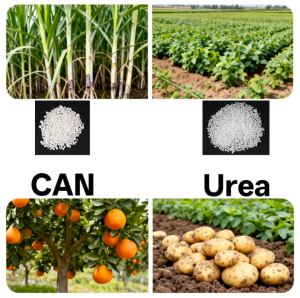
Calcium ammonium nitrate (CAN) stands out as a key nitrogen fertilizer that provides significant agronomic benefits and environmental advantages.
Typical Composition & Chemical Properties
Composed of: Ammonium nitrate (NH4NO3), calcium carbonate (CaCO3) or calcium oxide
Nitrogen Content: Typically 27% (balanced ~13.5% nitrate-N and 13.5% ammonium-N)
Calcium Content: ~8%, sufficient to positively influence soil and plant health
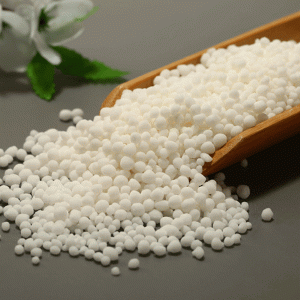
Granular Form: Minimizes dustiness and caking, allowing easier handling and uniform application in the field
Dual-Form Nitrogen & Consistent Supply
Nitrate-Form Nitrogen: Immediately available for plant uptake, promoting fast vegetative growth in crops
Ammonium-Form Nitrogen: Retained in the soil for longer periods—provides sustained nutrition and reduces risk of nitrogen leaching losses
Calcium Neutralizes Soil Acidity: Particularly beneficial in acidic soils, leading to stronger plant cell walls and improved overall crop quality
The presence of calcium not only bolsters soil structure, but also enhances nutrient uptake and microbial activity, supporting sustainable agriculture.

Benefits of Using Calcium Ammonium Nitrate Fertilizer
Supports variable and balanced pH: Safeguards against acidification of soils over repeated use
Enhances crop yields: Immediate and sustained nitrogen availability supports both leafy vegetative growth and reproductive phases of cereals, vegetables, and fruit crops
Improves fruit firmness & quality: Calcium strengthens cell wall integrity, reduces fruit splitting, and prolongs shelf-life—important for tomatoes, citrus, apples, and other high-value crops
Reduces risk of nitrogen losses: By having both nitrate and ammonium forms, CAN minimizes leaching and volatilization, promoting efficient nitrogen utilization
Simple application: Its granular physical form makes it ideal for broad-acre and row crop farming, as well as precision spreading equipment