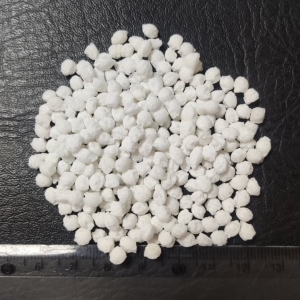
Granular ammonium sulphate is a mineral fertilizer containing 21% nitrogen and 24% sulphur. Granular ammonium sulphate also contains bio-absorbable iron compounds. Ammonium sulfate is produced by neutralizing sulfuric acid with synthetic ammonia. Accordingly, granular ammonium sulfate is an excellent source of sulfur nutrition, since a significant portion of sulfur in plants is in the form of sulfuric acid salts. The ammonium contained in granular ammonium sulfate is readily available to plants, is not highly mobile and does not leach out of the soil, which makes it possible to use it widely as a basic fertilizer and during spring fertilization.
Chemical Properties
Chemical formula: (NH4)₂SO₄
N content: 21%
S content: 24%
Water solubility: 750 g/L
Solution pH: 5 to 6

Application and Advantages of Ammonium Sulfate Granules
It is best to apply granular ammonium sulfate in the spring as the main application for pre-sowing cultivation, which allows for an even distribution of the fertilizer over the field. Fertilizing crops with ammonium sulfate is also effective. In addition, ammonium sulfate can be added to liquid nitrogen fertilizer solutions.
Ammonia losses during surface application of ammonium sulfate are no more than 1-3%, while urea and ammonium nitrate losses are 25-30% of the applied amount of nitrogen. It is also important that nitrogen in ammonium sulfate is in the most accessible form for plants and participates in the formation of the crop throughout the growing season.
During long-term storage, granular ammonium sulfate does not caking and retains its flowability, as it has low hygroscopicity. It regulates the growth of vegetative mass, increases crop yields, and increases plant vitality. It is used on all types of soils (preliminary liming is required on acidic soils) and in all soil and climatic zones. Winter plants should be fertilized in the fall, and it is also possible to fertilize during the growing season. Spring fertilization should be carried out before sowing, as well as during the growing season.
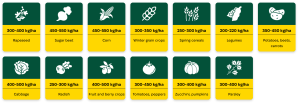
Application Rate